by Emily Kauble
Share
by Emily Kauble
Share
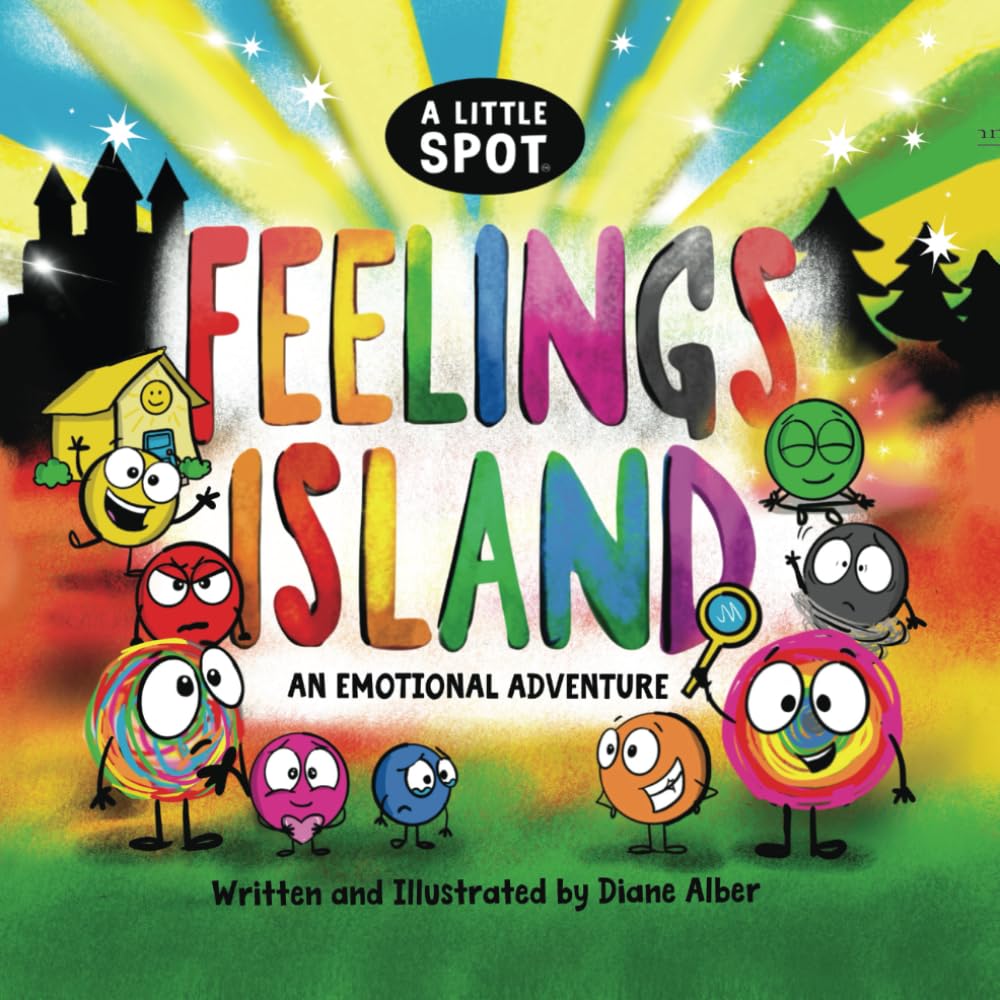
A Little SPOT Feelings Island: An Emotional Adventure Paperback
A Little SPOT of Emotion 8 Plush Toys with Feelings Book Box Set
A Little SPOT: My First Emotions (Inspire to Create: A Little Spot)
Calming Strategies
- Take a deep breath.
- The key to a good deep breath is to have their belly move, not their chest. Have them put one hand on their belly and one hand on their chest. When they breathe in, their stomach should be moving out. And when they breathe out, their stomach should move in. Use props to make it more fun, like bubbles, a pinwheel, or laying down with a teddy bear on their stomach.
- Imagine your favorite place.
- Have your child imagine their favorite place in the world. Maybe it’s the beach, or the woods, or in a quiet spot in your home. Have them use their senses to think about this place – what do they see, hear, feel? Encourage them to stay there for a few minutes.
- Pick a number.
- Sometimes it’s helpful to focus on something simple, like counting. Have them pick a number and count to it. Or they could start with a random number, like 58, and count backwards down to one. Or they could start at 100 and count backwards down by 7’s. Try a few different ways of counting to see which works best.
- Find distractions
- Find something that makes them laugh.
- Tell silly jokes, make up some Would You Rather questions, or do a mad libs together. The simple act of laughter can make kids feel a little bit better and reduce stress.
- Help others.
- Find a task that they can help you with in the classroom. Focusing on helping other people can distract from their own worries.
- Play a game.
- If structured classroom time isn’t working, take a step back from learning and let them play. Intentional playing time can still be focused on God.
- Find something that makes them laugh.
- Creating a mental health friendly classroom environment
- Know Your Students.
- Make sure you know their name or the name they prefer to use and something about them. Start the year with getting to know your activities then refresh your knowledge of children each term. Some schools even do this as a whole staff-training event to make sure that all staff know about children and the things they like, enjoy or the challenges they have had. This really sets a climate for relationships to be central to the ethos of the school.
- Develop A Sense of Belonging Within the Classroom.
- Feeling that you belong is a very powerful human need. It enables you to feel seen and thought about, accepted but most of all safe. It is so worth the time to build this into your practice at the start of each year and then to continue developing throughout the year.
- Weave the Skills That Underpin Positive Mental Health Into Everyday Teaching.
- Teach social skills, emotional literacy, how our brain impacts on how we think and behave, restorative practice, listening skills and acceptance. Help children talk about change and how it makes them feel and put things in place to manage and build their resilience. These areas can easily be taught in small chunks and woven into a range of lessons.
- Make Your Classroom a Safe Space to Learn.
- Make mistakes, ask questions and discuss topics, ensure that children are respectful and actively listen to others, that being kind is celebrated and supporting others noticed and commented on. Model how you would like children to be within your four walls and ‘notice’ when this happens.
- Recognise Emotions.
- It is useful to identify and teach the skills linked to how our emotions, thoughts, physical sensations and behaviors are all linked, and help children and young people develop healthy ways of coping. Encourage children and young people to talk about feelings and how they cope. Work together to set up a space in the classroom for children to use to self-regulate and manage. This may contain a range of activities or things to support healthy regulation.
- Keep It Calm.
- Being able to calm down is a skill that needs to be practiced (with some children more than others!). Embedding periods of calm into your classroom through simple activities such as doodling, reading or coloring for short periods of time help children to relax. Once this is established you can develop other relaxation strategies and test them out. Not all people find the same things relaxing but what is important is that children start to listen to their bodies and notice how they feel and how to change things. For many traumatized children and young people mindfulness can be challenging, shutting their eyes and allowing thoughts to flow can be really stressful and may cause challenges for staff to manage. Explore a range of relaxation strategies with the children and young people and discuss how they experience them.
- Be Playful and Have Fun.
- Play fosters creativity, collaboration and problem solving, all of which are important for good mental health. Make sure there is time in the timetable for children to play, whether it’s a game, a role play activity or a team building game to foster class relationships and add to that sense of belonging.
- All Feelings Allowed but Not All Behaviour Accepted.
- Give feelings an appropriate outlet. Put boundaries in place around behaviors to keep everyone safe and develop strategies to help reinforce those boundaries. Ensure that all feel safe and that you will support the children to learn how to manage the big feelings they may experience. If at the beginning of the year you focus on creating a sense of belonging, it can be really easy to co-create a classroom charter or set of rules. This way you and the children and young people can explore your expectations of each other. When addressing undesirable behavior, help both the child concerned and the other children in the class to understand that there are appropriate and inappropriate ways of dealing with difficult emotions. Learning to identify these will come in time as the children are supported in identifying and accepting their feelings.
- Move On From a Negative Experience.
- Sometimes it’s important to help children (and colleagues) to see past the latest disastrous playtime or bad lesson. Give children time to allow these emotions to change. Offer different strategies to help, these could be a person to talk to, time to self-regulate or problem solve.
- Help Children Understand Learning is Full of Emotions.
- Joy, delight, frustration, anger are all feelings that can be experienced. It may be that they didn’t understand column subtraction straight away, or they didn’t get the results they wanted in a test. By helping children put language around these physical sensations and then helping to develop strategies to manage and self-regulate or change state. A great way to support children and young people is to ensure that you explore Learning Zones, helping children to understand what happens when they step outside of their comfort zone can help the discussions needed around barriers to learning.
- Know Your Students.

We love the Surgeon General’s op-ed in the NY Times today! Highlights include:
The mental health crisis among young people is an emergency — and social media has emerged as an important contributor. Adolescents who spend more than three hours a day on social media face double the risk of anxiety and depression symptoms, and the average daily use is 4.8 hours.
It is time to require a surgeon general’s warning label on social media platforms, stating that social media is associated with significant mental health harms for adolescents.
A surgeon general’s warning label, which requires congressional action, would regularly remind parents and adolescents that social media has not been proved safe. Evidence from tobacco studies show that warning labels can increase awareness and change behavior.
To be clear, a warning label would not, on its own, make social media safe for young people.
Legislation from Congress should shield young people from online harassment, abuse and exploitation and from exposure to extreme violence and sexual content that too often appears in algorithm-driven feeds. The measures should prevent platforms from collecting sensitive data from children and should restrict the use of features like push notifications, autoplay and infinite scroll, which prey on developing brains and contribute to excessive use.
Schools should ensure that classroom learning and social time are phone-free experiences. Parents, too, should create phone-free zones around bedtime, meals and social gatherings to safeguard their kids’ sleep and real-life connections — both of which have direct effects on mental health. And they should wait until after middle school to allow their kids access to social media. This is much easier said than done, which is why parents should work together with other families to establish shared rules, so no parents have to struggle alone or feel guilty when their teens say they are the only one who has to endure limits.
We 100% agree, with the @u.s.surgeongeneral !
Join us in delaying smartphones until the end of 8th grade with our pledge! Delay social media until 16!